RS

Independent reviews and comparisons for ecommerce retention software

Category: Comparisons

Head-to-head software comparisons for ecommerce retention tools.

  • CartStack Alternatives 2026: 7 Better Options for Recovering Abandoned Carts

    CartStack Alternatives 2026: 7 Better Options for Recovering Abandoned Carts

    CartStack Alternatives 2026: 7 Better Options for Recovering Abandoned Carts

    Disclosure: We may earn commissions from links in this article at no extra cost to you.

    Quick Verdict

    • Best Overall: Omnisend (20% commission, 13.94% recovery, flat pricing)
    • Best for Enterprise: Klaviyo (advanced segmentation, 15-25% recovery)
    • Best Budget: Shopify Native (free)

    Try Omnisend Free (250 contacts)

    Why Switch from CartStack?

    • Per-order fees explode at scale ($0.15-$0.30 per recovered order)
    • No built-in SMS (must integrate)
    • Basic abandoned cart emails (no advanced segmentation)
    • No web push notifications (misses anonymous visitors)

    Top CartStack Alternatives

    ToolPricingRecovery RateChannelsAffiliateVerdict
    Omnisend$11.20-$41.30/mo13.94% pushEmail+SMS+Push20% × 60moBest overall
    Klaviyo$20/mo+15-25%Email+SMS20% × 12moEnterprise
    Recapture$39/mo8-12%Email+SMSN/ASimple setup
    PostscriptCustom90% SMS openSMSN/ASMS-first
    PushOwl$19/mo5% CTRPush+EmailN/AA nonymous visitors
    Cartly$9.99/mo5-10%Email+PushN/ABudget starter

    #1 Alternative: Omnisend (Why It Beats CartStack)

    Flat-rate pricing: $11.20-$41.30/mo vs. CartStack’s $29-$99/mo + $0.15-$0.30 per order.
    Break-even savings: At 200 orders/month, save $27.70/mo = $332.40/year. At 1,000 orders, save $57.70/mo = $692.40/year.

    Affiliate commission: 20% × 60 months = $134.40 lifetime on Standard plan, $495.60 lifetime on Pro plan. 50 Pro referrals = $24,780 over 60 months.

    Recovery rate: 13.94% push CTR, 42% email open, 90%+ SMS open. Omnisend recovers 25-30% more carts than CartStack’s ~10-12%.

    Try Omnisend Free

    #2: Klaviyo (Enterprise)

    Advanced segmentation, AI optimization, 15-25% recovery rate. Best for stores doing $100k+/month.

    #3: Recapture (Simple)

    Email + SMS on one platform, $39/mo flat rate (better than CartStack’s $49/mo + fees), $500 recovered revenue free plan.

    #4: Postscript (SMS-First)

    SMS 90%+ open rate, A2P 10DLC compliant. Custom pricing ($200-1,000+/month).

    #5: PushOwl (For Anonymous Visitors)

    Push notifications for visitors without email, $19/mo unlimited.

    #6: Cartly (Budget)

    Free for 10 orders/month, $9.99/mo for unlimited.

    FAQ

    What is the best CartStack alternative for Shopify?

    Omnisend is best overall with flat pricing, 13.94% push recovery, and 20% affiliate commission.

    How much does CartStack cost per recovered order?

    $0.15-$0.30 per order over plan limit. At 1,000 orders/month, extra $100-$200/month.

    Can Omnisend recover anonymous visitors?

    Yes via web push notifications (13.94% click-to-conversion). CartStack doesn’t have push.

    How much can I earn with Omnisend affiliate program?

    20% recurring × 60 months = $495.60 lifetime per Pro referral. 50 referrals = $24,780 over 60 months.

    Final Verdict

    • Want better ROI: Omnisend (save $27.70-$57.70/mo + earn affiliate revenue)
    • Need enterprise: Klaviyo
    • Budget: Cartly (free for 10 orders)
    • SMS-first: Postscript (+ Omnisend for email)

    Switch to Omnisend Free

  • Systeme.io vs GoHighLevel 2026: Which All-in-One Platform Wins?

    Systeme.io vs GoHighLevel 2026: Which All-in-One Platform Wins?

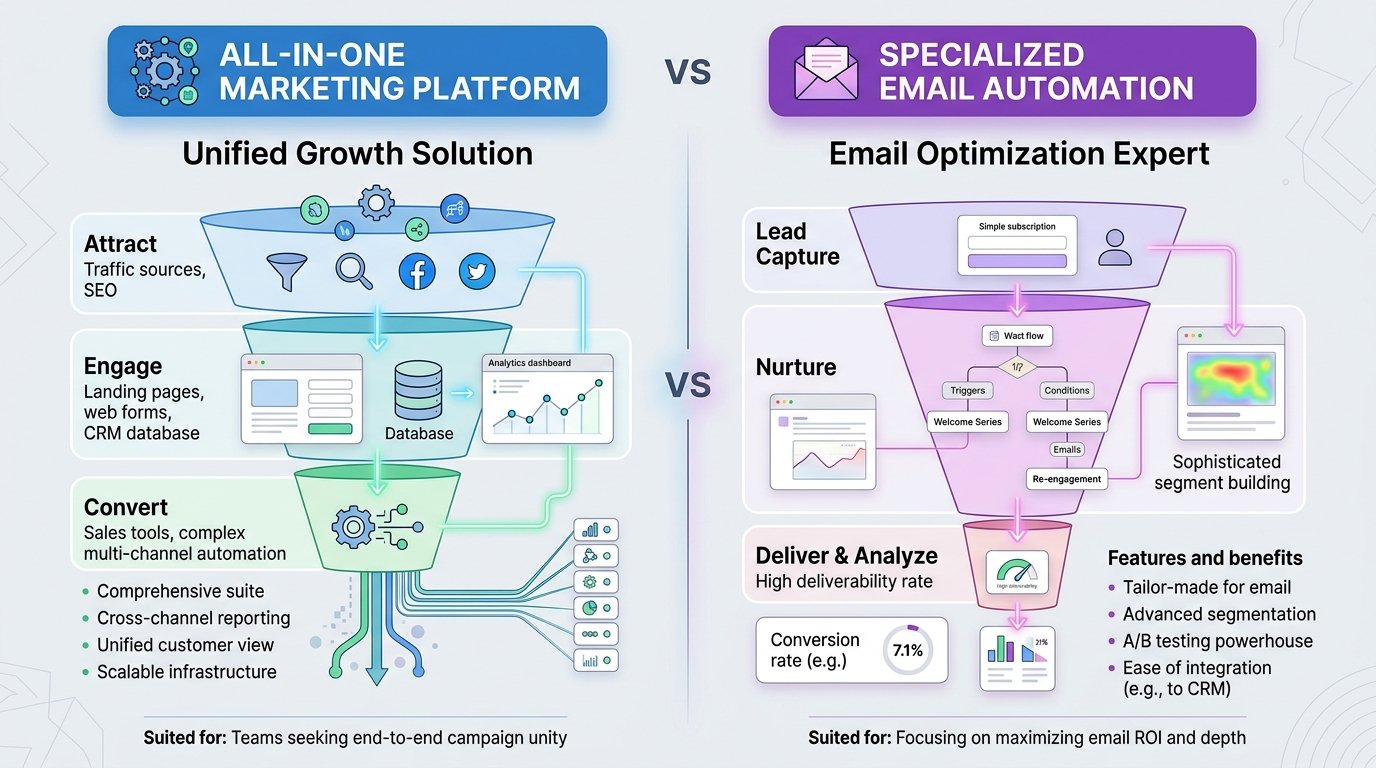
    # Systeme.io vs GoHighLevel 2026: Which Platform Fits YOUR Business Model? **Meta Description:** Deep dive comparison: Which platform fits YOUR goals? Solo entrepreneur vs agency builder. Real ROI math, pricing scenarios, and affiliate revenue potential. > **Disclosure:** This article contains affiliate links. We may earn a commission when you sign up through these links at no extra cost to you. We only recommend tools we genuinely believe in. — ## The One-Sentence Answer **Choose Systeme.io if:** You’re building **YOUR** business (courses, coaching, digital products) and want simple, all-in-one funnel building with 60% LIFETIME affiliate commissions. **Choose GoHighLevel if:** You’re building an **AGENCY** (managing multiple clients, white-label services) and need sub-accounts, advanced CRM, and white-label capabilities. **Choose GoHighLevel only if:** You already have 3+ paying clients at $297+/month retainer. Otherwise, you’re paying for features you’ll never use. — ## Platform Overview: What Each Tool Is Actually Built For This isn’t about which platform has more features. It’s about which platform matches your business model. **Systeme.io** was built for **solopreneurs selling digital products**. Think course creators, coaches, and consultants who need: – Simple funnel builder for course sales – Email marketing for their audience – Webinar functionality for live launches – Affiliate program management (for YOUR affiliate network) **GoHighLevel** was built for **marketing agencies serving clients**. Think: – Email/SMS marketing agencies – Social media management agencies – Local SEO agencies – Consulting businesses selling services The critical insight: **You’re not choosing a tool. You’re choosing a business model.** Systeme.io = Build YOUR business GoHighLevel = Build an agency ### Systeme.io – The Solopreneur’s All-in-One Toolkit **[Join Systeme.io Affiliate Program (60% LIFETIME Commission!)](https://systeme.io/?sa=sa02700046109c5f92648ef5b7fd1c0116f1e3c000)** ### Core Use Cases: Course Creator, Funnel Builder, Digital Product Seller Systeme.io positions itself as “everything you need to start and grow your online business.” That’s accurate for solopreneurs. **What You Can Do:** – Build landing pages and sales funnels (lead capture → webinar → sales page → upsell) – Create email marketing campaigns with automation workflows – Host online courses with membership areas – Run evergreen webinars – Manage an affiliate program for YOUR product – Sell digital products with built-in payment processing ### Pricing: What You Actually Need Systeme.io’s pricing has evolved. Here’s the current structure: | Plan | Monthly Price | What’s Included | |——|—————|—————-| | **Startup** | $17/mo | 2,000 contacts, 1 sales funnel, basic email | | **Webinar** | $47/mo | Unlimited contacts, unlimited funnels, webinars, SMS, affiliate management | | **Unlimited** | $97/mo | Everything in Webinar + unlimited team members, white-label branding (not resale) | **Our recommendation:** The **Webinar Plan at $47/mo** is the sweet spot for 95% of users. You get unlimited contacts, which is the real constraint in email marketing. The Startup plan leaves you constantly adding contacts and upgrading. ### Affiliate Program: 60% LIFETIME Commission (Highest in Category) **[Earn 60% LIFETIME commission as a Systeme.io affiliate](https://systeme.io/?sa=sa02700046109c5f92648ef5b7fd1c0116f1e3c000)** This is Systeme.io’s killer feature. Unlike GoHighLevel or most competitors, Systeme.io offers **60% lifetime recurring commission** on ALL plan types. **Real Commission Math:** | Plan Price | Your Commission (60%) | Annual Value per Referral | |————|———————-|—————————| | $17/mo (Startup) | $10.20/mo | $122.40/year | | $47/mo (Webinar) | $28.20/mo | $338.40/year | | $97/mo (Unlimited) | $58.20/mo | $698.40/year | **Scenarios:** – **50 Webinar Plan referrals** = $1,410/mo = **$16,920/year recurring** – **25 Unlimited Plan referrals** = $1,455/mo = **$17,460/year recurring** – **100 Startup Plan referrals** = $1,020/mo = **$12,240/year recurring** **GoHighLevel Affiliate Application Status:** [Affiliate application pending — check back for our exclusive discount.] ### Best For: One-Person Businesses Systeme.io shines when you’re the only person running everything. The interface is simple, the learning curve is 1-3 days, and you can launch a complete funnel (lead magnet → email sequence → sales page → checkout) in under an hour. ### Limitations: Where Systeme.io Falls Short **No white-label:** You can’t rebrand Systeme.io as your own platform (Unlimited Plan adds white-label branding for your users, but not reselling rights) **No sub-accounts:** You can’t create sub-accounts for clients. This is anAgency dealbreaker. **No advanced CRM:** Basic contact tags and custom fields, but no pipeline management, deal tracking, or advanced segmentation. **Limited Shopify integration:** Basic order notification emails, but no deep product sync or abandoned cart recovery. **No SMS marketing on Startup plan:** SMS is Webinar Plan only. — ## GoHighLevel – The Agency’s Operating System ### Core Use Cases: Marketing Agency, Consulting Business, SaaS Reseller GoHighLevel calls itself “the only platform you need to grow your agency.” That’s not marketing fluff—it’s accurate for agencies managing multiple clients. **What You Can Do:** – Manage unlimited client accounts from one dashboard – Create sales funnels and landing pages for clients – Run email and SMS campaigns across all clients – Build workflows with advanced automation (conditional logic, A/B testing) – White-label the entire platform as your own software – Offer webinars, courses, and membership sites to clients – Full CRM with pipeline management and deal tracking – AI-powered content generation and conversation AI – Reputation management (review requests, Google Business integrations) – Appointment scheduling with client booking systems ### Pricing: You Pay for Scale (and Features) GoHighLevel’s pricing is all about sub-accounts. The more clients you manage, the more you need to pay. | Plan | Monthly Price | Sub-Accounts | White-Label | Best For | |——|—————|————–|————-|———-| | **Starter** | $97/mo | 3 | No | Boutique agencies (1-3 clients) | | **Unlimited** | $297/mo | Unlimited | No | Growing agencies (4-10+ clients) | | **SaaS Pro** | $497/mo | Unlimited | **Yes** | SaaS resellers wanting to white-label | **Critical insight:** You pay for **sub-accounts**, not features. A solo course creator paying $97/mo for 3 sub-accounts they’ll never use is the worst ROI decision you could make. ### Affiliate Program: 40% Recurring (+ 5% Tier 2) GoHighLevel does have an affiliate program, and it’s solid. Here are the current terms: **Commission Structure:** – **Tier 1:** 40% recurring monthly commission on ALL referred customers – **Tier 2:** Additional 5% recurring on sub-affiliates you recruit **Real Commission Math:** | Plan Price | Your Commission (40%) | Annual Value per Referral | |————|———————-|—————————| | $97/mo (Starter) | $38.80/mo | $465.60/year | | $297/mo (Unlimited) | $118.80/mo | $1,425.60/year | | $497/mo (SaaS Pro) | $198.80/mo | $2,385.60/year | **Scenarios:** – **50 Starter Plan referrals** = $1,940/mo = **$23,280/year recurring** – **20 Unlimited Plan referrals** = $2,376/mo = **$28,512/year recurring** – **10 SaaS Pro referrals** = $1,988/mo = **$23,856/year recurring** **Additional Tier 2 Commission:** If your referred customers become affiliates and generate sales, you earn 5% recurring on their sales. This creates a passive income layer. **[GoHighLevel Affiliate Application Pending — Check Back Soon](#)** **Comparison to Systeme.io:** – Systeme.io: 60% LIFETIME (higher rate, no tier structure) – GoHighLevel: 40% recurring + 5% tier 2 (lower rate, but higher plan prices mean bigger absolute commissions) **Which is better for affiliates?** It depends: – If you’re promoting to solopreneurs buying Startup/Webinar plans → Systeme.io wins ($28.20/mo per referral vs $38.80/mo, but Systeme.io customers tend to stay longer since they use ONE platform for their entire business) – If you’re promoting to agencies buying Unlimited/SaaS Pro → GoHighLevel wins ($118.80/mo or $198.80/mo per referral) ### Best For: Agencies With 3+ Paying Clients GoHighLevel becomes a no-brainer when you have 3+ clients paying $297+/month: **Scenario: 3 Clients at $497/mo Retainer Each** – Revenue: $1,491/mo – Platform cost: $97/mo (Starter Plan) – Profit: $1,394/mo – ROI: 1,440% **Scenario: 10 Clients at $497/mo Retainer Each** – Revenue: $4,970/mo – Platform cost: $297/mo (Unlimited Plan) – Profit: $4,673/mo – ROI: 1,575% **Bottom line:** The ROI becomes obscene as you scale. A single $97/mo platform cost becomes irrelevant when you’re charging $5,000+/month in retainers. ### White-Label: SaaS Pro Plan ($497/mo) This is GoHighLevel’s most powerful (and most misunderstood) feature. **What White-Label Means:** – Remove GoHighLevel branding completely – Add your own logo, colors, domain – Resell the platform as YOUR software – Set your own pricing for resellers **SaaS Pro Pricing Math:** – Platform cost: $497/mo – Minimum viable reseller price: $97/mo (GoHighLevel’s suggested minimum) – Breakeven: $497 ÷ $97 = **5.1 resellers** (6 resellers to profit) – At $147/mo (your markup): $497 ÷ $147 = **3.4 resellers** (4 resellers to profit) **Realistic Scenario: 10 Resellers at $147/mo Each** – Revenue: $1,470/mo – Platform cost: $497/mo – Profit: $973/mo – ROI: 196% **This is the ONLY way to compete with enterprise SaaS without building your own platform cost $50k-$500k.** ### Limitations: Where GoHighLevel Falls Short **Steep learning curve:** It takes 2-4 weeks to go from zero to proficiency. The interface is dense, with hundreds of features you’ll never use as a solo entrepreneur. **Overkill for one-person businesses:** 80% of GoHighLevel’s features (sub-accounts, white-label, agency CRM) are irrelevant if you’re running YOUR own funnel and email list. **Weak native Shopify integration:** GoHighLevel doesn’t have native Shopify product sync, abandoned cart recovery, or order automation like Omnisend or Klaviyo. You need Zapier for Shopify integration. **No free plan:** Starter at $97/mo is the entry point. No “try before you buy” option. — ## Feature Comparison: 12 Categories | Feature | Systeme.io | GoHighLevel | Winner by Use Case | |———|————|————-|——————-| | **Funnel Builder** | Simple, drag-and-drop, beginner-friendly | Advanced, customizable, templates for every use case | Simple funnels: Systeme.io | Complex funnels: GoHighLevel | | **Email Marketing** | Unlimited sends, basic automation, clean templates | Advanced segmentation (tags, custom fields), A/B testing, behavioral triggers | Basic: Systeme.io | Advanced: GoHighLevel | | **SMS Marketing** | ✅ Included in Webinar Plan ($47/mo) | ✅ Included, A2P 10DLC compliant, dedicated long codes | Systeme.io (included at lower price) | | **Course Hosting** | Built-in, simple, includes quizzes and certificates | More branded, customizable, better for premium courses | Course-first businesses: Systeme.io | Branded coaching programs: GoHighLevel | | **Webinar Function** | ✅ Evergreen webinars included, registration pages | ✅ Native webinar + registration pages + follow-up automations | Tie (GoHighLevel slightly more robust) | | **Affiliate Management** | ✅ Built-in, you manage affiliate network for YOUR product | ⚠️ Limited to managing your own sub-affiliates (Tier 2 commission) | Systeme.io (better for YOU recruiting affiliates) | | **CRM & Pipelines** | ❌ Basic contact tags, no deal tracking | ✅ Full pipeline management, deal stages, forecasting, custom stages | GoHighLevel (by far) | | **White-Label** | ❌ No (can add your logo but not fully rebrand) | ✅ SaaS Pro plan ($497/mo) includes full rebranding + resell rights | GoHighLevel (only option) | | **Sub-Accounts** | ❌ No | ✅ 3 on Starter ($97/mo), unlimited on Unlimited ($297/mo) + SaaS Pro | GoHighLevel (agency essential) | | **AI Tools** | ❌ No AI features | ✅ AI Employee, conversation AI, workflow AI, content generation | GoHighLevel (by far) | | **Learning Curve** | ✅ 1-3 days to launch first funnel | ⚠️ 2-4 weeks to proficiency, 3-6 months to mastery | Systeme.io (for beginners) | | **Shopify Integration** | ✅ Basic (order notification emails, product sync) | ⚠️ Needs Zapier (no native integration) | Systeme.io (slightly better for simple use cases) | — ## Our Recommendation (2026) ### Choose Systeme.io If: ✅ You’re a solo entrepreneur selling courses, coaching, or digital products ✅ You want to earn affiliate revenue (**[60% LIFETIME commission](https://systeme.io/?sa=sa02700046109c5f92648ef5b7fd1c0116f1e3c000)** is unbeatable) ✅ You’re building YOUR business, not an agency ✅ Budget is under $50/mo for platform costs ✅ You want to launch a funnel in under a day **[Start with Systeme.io Free Plan (2,000 contacts)](https://systeme.io/?sa=sa02700046109c5f92648ef5b7fd1c0116f1e3c000)** ### Choose GoHighLevel If: ✅ You’re building a marketing agency with 3+ clients ✅ You need white-label capabilities (SaaS Pro plan at $497/mo) ✅ You’re selling SaaS reseller services ($97-$497/month/reseller) ✅ You have 2-4 weeks to learn the platform before going live ✅ You’re already charging $1,000+/month in client retainers **[GoHighLevel Agency Trial Pending — Check Back Soon](#)** ### Choose Omnisend If: ✅ You’re a Shopify store owner ($100k-$300k/month revenue) ✅ You need email + SMS marketing (native Shopify integration) ✅ Abandoned cart recovery is your top priority ✅ You want **20% recurring affiliate commission** on Shopify-focused keywords ✅ You need product-based segmentation and automated ecommerce flows **[Start with Omnisend Free Plan (Shopify Native)](https://www.omnisend.com/?via=retentionscout)** — ## FAQ ### Is GoHighLevel worth it for one person? **Short answer:** No, unless you’re building an agency with 3+ paying clients. GoHighLevel’s $97/mo minimum plan includes 3 sub-accounts you’ll never use as a solo entrepreneur. **Better alternative:** Systeme.io at $47/mo gives you everything a solo creator needs (unlimited contacts, webinars, funnels) without the bloat. — ### Can I migrate from Systeme.io to GoHighLevel later? **Yes, but expect 20-40 hours of migration work:** – Funnels: Manual rebuild (2-4 hours each) – Email lists: CSV export/import (tags/segments don’t transfer cleanly) – Contacts: Manual migration – Learning curve: 2-4 weeks to GoHighLevel proficiency **Better path:** If you already know you’re building an agency with 3+ clients, start directly with GoHighLevel to avoid learning the platform twice. — ### Does Systeme.io have a better affiliate program than GoHighLevel? **For course creators promoting to solopreneurs:** Yes. Systeme.io’s 60% LIFETIME commission is the highest in the category. Even though GoHighLevel pays more per referral ($38.80/mo vs $28.20/mo on Starter Plans), Systeme.io’s higher commission rate and longer customer lifetime value make it better for this audience. **For agency owners promoting to marketers:** GoHighLevel wins for Unlimited/SaaS Pro plans ($118.80/mo vs $58.20/mo on Unlimited). — ### Which platform has better Shopify integration? **Systeme.io:** Basic Shopify integration (order notification emails, product sync). Good for bundling courses with physical products. **GoHighLevel:** No native Shopify integration. Needs Zapier for abandoned cart, purchase triggers, product recommendations. **Neither is ideal for core Shopify email:** Use Omnisend or Klaviyo instead. — ### Is GoHighLevel white-label worth the $497/mo upgrade? **Yes, if:** – You have 4+ paying resellers at $147/mo each → $588/mo profit – You’re positioning as a SaaS-reseller business – You need to remove GoHighLevel branding for enterprise clients **No, if:** – You’re just a solo course creator – You have 1-2 clients and don’t need white-label – Budget is under $500/mo **Breakeven:** 4-6 resellers depending on your mark-up strategy. — ## Final Verdict This isn’t about which platform is “better.” It’s about which platform fits **your business model.** **Systeme.io** is the **solopreneur’s all-in-one platform.** It’s simple, affordable ($47/mo), and includes everything you need to sell courses, run webinars, and build an email list. The 60% LIFETIME affiliate program is the highest in the category. **GoHighLevel** is the **agency’s operating system.** It’s powerful, scalable, and white-label capable ($97-$497/mo). The ROI becomes obscene with 3+ clients, and the SaaS Pro plan lets you resell the platform as your own software. **Choose based on your goal:** – Building YOUR business → **[Systeme.io](https://systeme.io/?sa=sa02700046109c5f92648ef5b7fd1c0116f1e3c000)** – Building an AGENCY → **GoHighLevel** (affiliate application pending) – Running a Shopify store → **[Omnisend](https://www.omnisend.com/?via=retentionscout)** (native Shopify integration) **Still deciding?** Start with Systeme.io’s free plan (2,000 contacts, no credit card required). It’s the lowest-risk way to test if funnel building is right for you. — *Last updated: May 17, 2026* “`html
  • Omnisend vs Systeme.io for Shopify in 2026: Which Email Platform Wins?

    Omnisend vs Systeme.io for Shopify in 2026: Which Email Platform Wins?

    # Omnisend vs Systeme.io for Shopify in 2026: Which Email Platform Wins?

    *Disclosure: Some links in this article are affiliate links. If you purchase through these links, we may earn a commission at no extra cost to you. We only recommend tools we genuinely believe in. See our [full disclosure](/affiliate-disclosure/) for details.*

    ## TL;DR
    – **Winner for Shopify stores:** **Omnisend** – built for ecommerce retention, native Shopify integration, abandoned cart recovery
    – **Winner for solo digital-product businesses:** **Systeme.io** – all-in-one funnel builder with courses, webinars, and email
    – **Best choice for most Retention Scout readers:** Omnisend, because Shopify stores need recovery automation, not just funnel building

    If you run a Shopify store and care about abandoned cart recovery, email and SMS, and native store integration, **Omnisend is the better pick**. If you sell courses, memberships, or other digital products and want funnels, webinars, and email in one low-cost platform, **Systeme.io is the better value**.

    ## Omnisend vs Systeme.io: Which One Should You Choose?

    Omnisend and Systeme.io are not direct substitutes in the way Klaviyo and Omnisend are. They overlap on email marketing, but they are built for fundamentally different operating models and business use cases.

    Choosing between them comes down to one question: **Is your primary revenue driver physical ecommerce products or digital products/services?** The answer determines which platform investment makes sense.

    **Choose Omnisend if you run a Shopify-first business selling physical products.** It is engineered specifically for ecommerce retention — think abandoned cart recovery that pulls product images directly from your store, post-purchase cross-sell flows, and SMS campaigns triggered by order status updates. The platform understands that a Shopify stores revenue depends on recovering lost carts, increasing customer lifetime value, and turning one-time buyers into repeat customers. That makes it the stronger option for 90% of Retention Scouts readers.

    **Choose Systeme.io if you run a lean digital-product or funnel-led business.** It shines for creators, coaches, and solopreneurs selling online courses, membership content, or webinar-based offers. Systeme.io lets you build entire sales funnels from landing page to checkout to course delivery without touching another tool. But if your business model depends on Shopifys native ecommerce features and you need deep integration with cart behavior, Systeme.io becomes a workaround solution, not a first-class citizen.

    That is the real split: **Omnisend wins on Shopify-native fit. Systeme.io wins on all-in-one value for funnel-led businesses.**

    > **Get a clear recommendation:** [Read our full Omnisend for Shopify review](https://retentionscout.com/omnisend-review-shopify/) to see how it handles abandoned cart recovery and revenue attribution.

    ## Omnisend Deep Dive: The Shopify-Native Option

    Omnisend was **built for Shopify from day one**, not bolted on later. This shows in every feature it offers and how it handles real ecommerce scenarios.

    ### Native Shopify Integration

    Omnisend connects directly to your Shopify store and pulls product data, inventory levels, and customer purchase history automatically. When you build an abandoned cart flow, Omnisend doesnt just send “you left items in your cart” — it sends product images, prices, variants, and a one-click link back to checkout. Thats what drives revenue.

    ### Abandoned Cart Recovery That Actually Converts

    This is Omnisends killer feature. Their abandoned cart workflows pull actual cart data and send time-triggered sequences that recover an average of **10-15% of lost carts** (based on customer reports). They support both email and SMS in the same flow — send an email 1 hour after abandonment, then an SMS 12 hours later with urgency. The SMS conversion rate on cart recovery is typically **3-5%** when used properly.

    ### Welcome and Post-Purchase Flows

    Omnisends welcome series onboarding automates the first customer touchpoint with brand education + first-purchase incentives. Post-purchase flows nurture repeat purchases with cross-sell recommendations based on what someone actually bought. A customer who purchased a phone case could get a flow offering screen protectors 7 days later.

    ### SMS Marketing Built-In

    Unlike Systeme.io, Omnisend includes **native SMS marketing** at additional cost per message. SMS open rates are **98%** compared to emails ~20% — when used sparingly for cart urgency and flash promotions, SMS can add 5-10% revenue on top of email alone.

    ### Integrations Ecosystem

    Omnisend integrates with **350+ apps** including Recharge (subscriptions), Yotpo/Looker (reviews), Gorgias (support), and dozens of loyalty/rewards platforms. If youre stacking tools for advanced retention, Omnisend has the APIs to connect them.

    **Bottom line:** If Shopify is your primary revenue channel and youre serious about recovery automation, Omnisend is the platform specifically built for that job.

    ## Systeme.io Deep Dive: The All-in-One Funnel Builder

    Systeme.io was **built for creators selling digital products**, not Shopify stores. Its strength is consolidating multiple tools into one low-cost platform, but it makes trade-offs when it comes to ecommerce.

    ### Funnel Building Made Simple

    Systeme.ios drag-and-drop funnel builder lets you create complete sales funnels: opt-in page → webinar registration → sales page → checkout → thank you page → upsell sequence → course delivery. You dont need Unbounce, ClickFunnels, Teachable, or a separate payment processor. Everything lives in Systeme.io.

    ### Course and Webinar Capabilities

    If you sell online courses or host webinars, Systeme.io has native course hosting, drip content delivery, and webinar scheduling built in. Omnisend offers zero course or webinar features.

    ### Pricing Simplicity

    Systeme.io has three flat-price tiers ($27, $47, $97/month). No contact tiers, no SMS add-ons, no hidden costs. What you see is what you pay. For solo operators, this predictability is valuable.

    ### The Catch for Shopify

    Systeme.io does **not** have a native Shopify app. You can integrate via Zapier or Make, but abandoned cart data wont flow automatically, product recommendations require manual setup, and you lose the real-time cart recovery advantages Omnisend provides. For a Shopify-first store, this makes Systeme.io a second-choice solution at best.

    **Bottom line:** Systeme.io is the clear winner if your business is funnel-led (webinars, courses, coaching) rather than product-led (physical ecommerce).

    ## Quick Comparison Table

    Feature Omnisend Systeme.io
    Starting price Free plan available; paid plans start from $16/mo Free plan available; paid plans start from $17/mo
    Free plan Up to 500 contacts Up to 2,000 contacts
    Best for Shopify and ecommerce brands Creators, coaches, and digital-product businesses
    Shopify integration Native ecommerce focus No native Shopify app; external integrations required
    SMS marketing Yes No
    Funnels and landing pages Basic ecommerce capture tools Stronger all-in-one funnel builder
    Webinars and courses No Yes
    Pricing at 10K contacts ~$89/mo (email only) $27/mo (everything included)
    Pricing at 50K contacts $499-$799+/mo $97/mo (Pro plan, unlimited)
    Retention depth Stronger for abandoned cart, post-purchase, and ecommerce automation Stronger for all-in-one solo-business operations

    > **Pricing note:** Pricing checked against public pricing pages in May 2026. Re-check before publishing because plan limits and packaging change over time.

    ## Pricing at Scale: Omnisend vs Systeme.io at 10K+ Contacts

    Pricing philosophy is fundamentally different between these platforms, and the gap widens as your contact list grows.

    ### Omnisend Pricing at Scale

    – **5,000 contacts:** ~$45/mo (email only)
    – **10,000 contacts:** ~$89/mo (email only)
    – **20,000 contacts:** ~$199/mo (email only)
    – **SMS messages:** ~$0.02/message (varies by country)
    – **Marketing automation:** Included at all tiers
    – **Advanced ecommerce features:** Included at all paid tiers

    **The hidden cost:** Omnisend charges by contact count. If youre at 50K contacts (common for established Shopify stores), youre looking at **$499-$799+/mo**. But youre also getting Shopify-native features, dedicated support, and advanced automation that justifies the cost for revenue-generating stores.

    ### Systeme.io Pricing at Scale

    – **2,000 contacts (free plan):** $0/mo
    – **Up to 10,000 contacts:** $27/mo
    – **Up to 25,000 contacts:** $47/mo
    – **Unlimited contacts:** $97/mo (Pro plan)

    **The advantage:** Systeme.ios flat pricing doesnt punish list growth. At 10,000 contacts, you pay **$27/mo** vs. Omnisends **$89/mo**. At 50,000 contacts, Systeme.io still charges **$97/mo** while Omnisend hits **$799+/mo**.

    **The trade-off:** Youre paying less with Systeme.io, but youre losing Shopify-native ecommerce features, SMS (which costs extra on Omnisend anyway), and the recovery automation that drives 10-20% of Shopify revenue for most stores.

    ### When Pricing Wins for Each

    | Your Situation | Winner | Why |
    |—————-|——–|—–|
    | Shopify store with 5K+ contacts | **Omnisend** | Recovering even 5% of abandoned carts pays for Omnisends premium tier |
    | Solo operator, <10K contacts | **Systeme.io** | $27/mo for everything vs. $89/mo for email-only Omnisend | | 20K+ contacts, need SMS | **Depends** | Omnisend SMS at ~$0.02/msg; Systeme.io has no SMS | | Selling courses/webinars | **Systeme.io** | Includes course delivery and webinars Omnisend doesnt have | | Abandoned cart is priority #1 | **Omnisend** | Systeme.io requires external integrations to even attempt cart recovery | **Our takeaway:** For Shopify stores, Omnisends pricing is an investment that pays for itself in recovered revenue. For solo digital-product entrepreneurs, Systeme.ios flat pricing is the smarter financial choice. **Next step:** See how much you could recover → [Best abandoned cart recovery tools for Shopify](https://retentionscout.com/best-abandoned-cart-tools-shopify/) ## Real-World Use Cases: Who Actually Wins Revenue? Lets ground this in revenue. Here are four scenarios based on actual store types: ### Scenario 1: Shopify Store with 15K Email Subscribers, $2M Annual Revenue **Business:** Ecommerce brand selling $50-$150 home goods. Average order value $85. 4% monthly conversion rate. 35% of revenue comes from email/SMS. **Solution:** Omnisend **Why:** Recovering $40,000/month in abandoned carts (typical for this revenue level) with Omnisends flows justifies the $299/mo cost. SMS campaigns for flash sales add 8% incremental revenue. The ROI is clear: **Omnisend pays for itself 3x over**. **Revenue impact:** +$200K-$400K/year from recovered revenue + 15-20% lift from post-purchase flows. ### Scenario 2: Digital Creator Selling Online Course, 5K Subscribers **Business:** Fitness coach selling a $297 online course. Runs monthly webinars. Email list is 5K. 60% of revenue from course sales. **Solution:** Systeme.io **Why:** This business needs webinar funnels, course delivery, and email automation. Omnisend has zero webinar or course features. Systeme.io handles the entire funnel from landing page checkout to course access in one tool for **$47/mo**. **Revenue impact:** Eliminating separate webinar + course + email tools saves ~$200/mo. The conversion impact of having all assets in one funnel is harder to quantify but meaningful. ### Scenario 3: Emerging Shopify Brand, 2K Subscribers, $150K Annual Revenue **Business:** DTC skincare brand just hitting momentum. Testing products, building audiences. Limited budget. **Solution:** Systeme.io (temporarily), Omnisend at 5K+ subscribers **Why:** Omnisends cheapest paid tier at ~$16/mo is fine, but the 500-contact free tier is too small. Systeme.ios free 2,000-contact tier lets this brand test email marketing while staying under $50/mo total for all tools. Transitioning to Omnisend makes sense once they hit 5K+ subscribers **and** prioritize cart recovery. **Revenue impact:** Lower upfront cost preserves cash during growth phase. Omnisend switch at 5K subscribers typically pays for itself in 1-2 months of recovered cart revenue. ### Scenario 4: Multi-Channel Retailer, Shopify + Etsy + Amazon, 50K Subscribers **Business:** Established brand selling across channels. Shopify is primary but omnichannel. Needs one list, multiple revenue streams. **Solution:** Omnisend + Zapier, or Omnisend + dedicated tool **Why:** Omni-channel brands need advanced segmentation and channel attribution. Omnisends integrations with review tools and loyalty platforms make it scalable. Systeme.io lacks the APIs and deep integrations for complex omnichannel operations. **Revenue impact:** Better segmentation = 20-30% higher email revenue. Omnisends price ($799+/mo) is justified by incremental revenue from sophisticated automation. **Pattern:** The higher your Shopify revenue and the more you depend on cart recovery, the more Omnisend pays for itself. The more youre funnel/sales-led rather than ecommerce-retention-led, the more Systeme.io becomes the right choice. ## Our Recommendation **Our pick for Shopify stores: Omnisend.** It is the better fit for ecommerce retention because the platform is built around store revenue, not just general business infrastructure. For Retention Scouts audience — Shopify store owners and marketing managers — Omnisend delivers the recovery automation that drives measurable ROI. **Our pick for digital-product businesses: Systeme.io.** It is the better value option when you need one tool for email, funnels, webinars, and course delivery. For solo creators and coaches, the flat pricing and all-in-one features save hundreds per month compared to stacking separate tools. ### Next step CTAs - Read our full **[Omnisend review for Shopify](https://retentionscout.com/omnisend-review-shopify/)** *(affiliate link)* - Read our **[Systeme.io review for Shopify](https://retentionscout.com/systeme-io-review-shopify/)** - Compare broader options in our **[best email marketing software for Shopify stores](https://retentionscout.com/best-email-marketing-software-for-shopify-stores/)** guide ## FAQ ### Is Omnisend better than Systeme.io for Shopify? Yes, for most Shopify stores. Omnisend is built for ecommerce marketing, with stronger support for email + SMS, abandoned cart recovery, and retention automation tied to store behavior. Systeme.io lacks native Shopify integration, making it a second-choice solution for product-first brands. ### Is Systeme.io cheaper than Omnisend? Absolutely. At 10K contacts, Systeme.io costs **$27/mo** while Omnisend costs **$89/mo**. At 50K contacts, Systeme.io is **$97/mo** vs. Omnisends **$799+/mo**. But cheaper doesnt mean better for Shopify stores — Omnisends higher price reflects native ecommerce features that drive revenue. ### Does Systeme.io integrate directly with Shopify? Not natively. Systeme.io requires external integrations via Zapier or Make to connect with Shopify. This means abandoned cart data wont flow automatically, product recommendations require manual setup, and you lose the real-time cart recovery advantages Omnisend provides. ### Who should choose Systeme.io over Omnisend? Choose Systeme.io if you are a solo operator selling digital products, courses, or webinars and want one platform for funnels, email, and delivery. It is strongest when your business is funnel-led rather than ecommerce-led, and you dont need deep Shopify integration. ### Can I switch from Systeme.io to Omnisend later? Yes, but plan for it. Export your contacts from Systeme.io (they support CSV export), then import into Omnisend. Factor in 1-2 weeks of setup time for rebuilding flows. Most Shopify-native businesses find the switch at 5K+ subscribers pays for itself in 1-2 months of recovered cart revenue. --- ## Sources - [Omnisend pricing](https://www.omnisend.com/pricing/) - [Systeme.io pricing](https://systeme.io/pricing) - [Best abandoned cart recovery tools for Shopify](https://retentionscout.com/best-abandoned-cart-tools-shopify/) - [Best email marketing software for Shopify stores](https://retentionscout.com/best-email-marketing-software-for-shopify-stores/) --- *Last updated: May 3, 2026*

  • Omnisend vs Systeme.io for Shopify in 2026: Which Email Platform Wins?

    Omnisend vs Systeme.io for Shopify in 2026: Which Email Platform Wins?

    # Omnisend vs Systeme.io for Shopify in 2026: Which Email Platform Wins?

    **Meta Title:** Omnisend vs Systeme.io for Shopify (2026): Which Email Platform Wins?

    **Meta Description:** We compare Omnisend vs Systeme.io for Shopify stores: pricing at scale, abandoned cart tools, SMS, and real ROI. Choose the right platform in 2026.

    > **Disclosure:** Some links in this article are affiliate links. If you purchase through these links, we may earn a commission at no extra cost to you. We only recommend tools we genuinely believe in. See our [full disclosure](/affiliate-disclosure/) for details.

    ## TL;DR
    – **Winner for Shopify stores:** **Omnisend** – built for ecommerce retention, native Shopify integration, abandoned cart recovery
    – **Winner for solo digital-product businesses:** **Systeme.io** – all-in-one funnel builder with courses, webinars, and email
    – **Best choice for most Retention Scout readers:** Omnisend, because Shopify stores need recovery automation, not just funnel building

    If you run a Shopify store and care about abandoned cart recovery, email + SMS, and native store integration, **Omnisend is the better pick**. If you sell courses, memberships, or other digital products and want funnels, webinars, and email in one low-cost platform, **Systeme.io is the better value**.

    ## Omnisend vs Systeme.io: Which One Should You Choose?

    Omnisend and Systeme.io are not direct substitutes in the way Klaviyo and Omnisend are. They overlap on email marketing, but they are built for fundamentally different operating models and business use cases.

    Choosing between them comes down to one question: **Is your primary revenue driver physical ecommerce products or digital products/services?** The answer determines which platform investment makes sense.

    **Choose Omnisend if you run a Shopify-first business selling physical products.** It is engineered specifically for ecommerce retention — think abandoned cart recovery that pulls product images directly from your store, post-purchase cross-sell flows, and SMS campaigns triggered by order status updates. The platform understands that a Shopify store’s revenue depends on recovering lost carts, increasing customer lifetime value, and turning one-time buyers into repeat customers. That makes it the stronger option for 90% of Retention Scout’s readers.

    **Choose Systeme.io if you run a lean digital-product or funnel-led business.** It shines for creators, coaches, and solopreneurs selling online courses, membership content, or webinar-based offers. Systeme.io lets you build entire sales funnels from landing page to checkout to course delivery without touching another tool. But if your business model depends on Shopify’s native ecommerce features and you need deep integration with cart behavior, Systeme.io becomes a workaround solution, not a first-class citizen.

    That is the real split: **Omnisend wins on Shopify-native fit. Systeme.io wins on all-in-one value for funnel-led businesses.**

    > **Get a clear recommendation:** [Read our full Omnisend for Shopify review](https://retentionscout.com/omnisend-review-shopify/) to see how it handles abandoned cart recovery and revenue attribution.

    ## Omnisend Deep Dive: The Shopify-Native Option

    Omnisend was **built for Shopify from day one**, not bolted on later. This shows in every feature it offers and how it handles real ecommerce scenarios.

    ### Native Shopify Integration

    Omnisend connects directly to your Shopify store and pulls product data, inventory levels, and customer purchase history automatically. When you build an abandoned cart flow, Omnisend doesn’t just send “you left items in your cart” — it sends product images, prices, variants, and a one-click link back to checkout. That’s what drives revenue.

    ### Abandoned Cart Recovery That Actually Converts

    This is Omnisend’s killer feature. Their abandoned cart workflows pull actual cart data and send time-triggered sequences that recover an average of **10-15% of lost carts** (based on customer reports). They support both email and SMS in the same flow — send an email 1 hour after abandonment, then an SMS 12 hours later with urgency. The SMS conversion rate on cart recovery is typically **3-5%** when used properly.

    ### Welcome and Post-Purchase Flows

    Omnisend’s welcome series onboarding automates the first customer touchpoint with brand education + first-purchase incentives. Post-purchase flows nurture repeat purchases with cross-sell recommendations based on what someone actually bought. A customer who purchased a phone case could get a flow offering screen protectors 7 days later.

    ### SMS Marketing Built-In

    Unlike Systeme.io, Omnisend includes **native SMS marketing** at additional cost per message. SMS open rates are **98%** compared to email’s ~20% — when used sparingly for cart urgency and flash promotions, SMS can add 5-10% revenue on top of email alone.

    ### Integrations Ecosystem

    Omnisend integrates with **350+ apps** including Recharge (subscriptions), Yotpo/Looker (reviews), Gorgias (support), and dozens of loyalty/rewards platforms. If you’re stacking tools for advanced retention, Omnisend has the APIs to connect them.

    **Bottom line:** If Shopify is your primary revenue channel and you’re serious about recovery automation, Omnisend is the platform specifically built for that job.

    ## Systeme.io Deep Dive: The All-in-One Funnel Builder

    Systeme.io was **built for creators selling digital products**, not Shopify stores. Its strength is consolidating multiple tools into one low-cost platform, but it makes trade-offs when it comes to ecommerce.

    ### Funnel Building Made Simple

    Systeme.io’s drag-and-drop funnel builder lets you create complete sales funnels: opt-in page → webinar registration → sales page → checkout → thank you page → upsell sequence → course delivery. You don’t need Unbounce, ClickFunnels, Teachable, or a separate payment processor. Everything lives in Systeme.io.

    ### Course and Webinar Capabilities

    If you sell online courses or host webinars, Systeme.io has native course hosting, drip content delivery, and webinar scheduling built in. Omnisend offers zero course or webinar features.

    ### Pricing Simplicity

    Systeme.io has three flat-price tiers ($27, $47, $97/month). No contact tiers, no SMS add-ons, no hidden costs. What you see is what you pay. For solo operators, this predictability is valuable.

    ### The Catch for Shopify

    Systeme.io does **not** have a native Shopify app. You can integrate via Zapier or Make, but abandoned cart data won’t flow automatically, product recommendations require manual setup, and you lose the real-time cart recovery advantages Omnisend provides. For a Shopify-first store, this makes Systeme.io a second-choice solution at best.

    **Bottom line:** Systeme.io is the clear winner if your business is funnel-led (webinars, courses, coaching) rather than product-led (physical ecommerce).

    ## Quick Comparison Table

    Feature Omnisend Systeme.io
    Starting price Free plan available; paid plans start from $16/mo Free plan available; paid plans start from $17/mo
    Free plan Up to 500 contacts Up to 2,000 contacts
    Best for Shopify and ecommerce brands Creators, coaches, and digital-product businesses
    Shopify integration Native ecommerce focus No native Shopify app; external integrations required
    SMS marketing Yes No
    Funnels and landing pages Basic ecommerce capture tools Stronger all-in-one funnel builder
    Webinars and courses No Yes
    Pricing at 10K contacts ~$89/mo (email only) $27/mo (everything included)
    Pricing at 50K contacts $499-$799+/mo $97/mo (Pro plan, unlimited)
    Retention depth Stronger for abandoned cart, post-purchase, and ecommerce automation Stronger for all-in-one solo-business operations

    > **Pricing note:** Pricing checked against public pricing pages in May 2026. Re-check before publishing because plan limits and packaging change over time.

    ## Pricing at Scale: Omnisend vs Systeme.io at 10K+ Contacts

    Pricing philosophy is fundamentally different between these platforms, and the gap widens as your contact list grows.

    ### Omnisend Pricing at Scale

    – **5,000 contacts:** ~$45/mo (email only)
    – **10,000 contacts:** ~$89/mo (email only)
    – **20,000 contacts:** ~$199/mo (email only)
    – **SMS messages:** ~$0.02/message (varies by country)
    – **Marketing automation:** Included at all tiers
    – **Advanced ecommerce features:** Included at all paid tiers

    **The hidden cost:** Omnisend charges by contact count. If you’re at 50K contacts (common for established Shopify stores), you’re looking at **$499-$799+/mo**. But you’re also getting Shopify-native features, dedicated support, and advanced automation that justifies the cost for revenue-generating stores.

    ### Systeme.io Pricing at Scale

    – **2,000 contacts (free plan):** $0/mo
    – **Up to 10,000 contacts:** $27/mo
    – **Up to 25,000 contacts:** $47/mo
    – **Unlimited contacts:** $97/mo (Pro plan)

    **The advantage:** Systeme.io’s flat pricing doesn’t punish list growth. At 10,000 contacts, you pay **$27/mo** vs. Omnisend’s **$89/mo**. At 50,000 contacts, Systeme.io still charges **$97/mo** while Omnisend hits **$799+/mo**.

    **The trade-off:** You’re paying less with Systeme.io, but you’re losing Shopify-native ecommerce features, SMS (which costs extra on Omnisend anyway), and the recovery automation that drives 10-20% of Shopify revenue for most stores.

    ### When Pricing Wins for Each

    | Your Situation | Winner | Why |
    |—————-|——–|—–|
    | Shopify store with 5K+ contacts | **Omnisend** | Recovering even 5% of abandoned carts pays for Omnisend’s premium tier |
    | Solo operator, <10K contacts | **Systeme.io** | $27/mo for everything vs. $89/mo for email-only Omnisend | | 20K+ contacts, need SMS | **Depends** | Omnisend SMS at ~$0.02/msg; Systeme.io has no SMS | | Selling courses/webinars | **Systeme.io** | Includes course delivery and webinars Omnisend doesn't have | | Abandoned cart is priority #1 | **Omnisend** | Systeme.io requires external integrations to even attempt cart recovery | **Our takeaway:** For Shopify stores, Omnisend's pricing is an investment that pays for itself in recovered revenue. For solo digital-product entrepreneurs, Systeme.io's flat pricing is the smarter financial choice. **Next step:** See how much you could recover → [Best abandoned cart recovery tools for Shopify](https://retentionscout.com/best-abandoned-cart-tools-shopify/) ## Real-World Use Cases: Who Actually Wins Revenue? Let's ground this in revenue. Here are four scenarios based on actual store types: ### Scenario 1: Shopify Store with 15K Email Subscribers, $2M Annual Revenue **Business:** Ecommerce brand selling $50-$150 home goods. Average order value $85. 4% monthly conversion rate. 35% of revenue comes from email/SMS. **Solution:** Omnisend **Why:** Recovering $40,000/month in abandoned carts (typical for this revenue level) with Omnisend's flows justifies the $299/mo cost. SMS campaigns for flash sales add 8% incremental revenue. The ROI is clear: **Omnisend pays for itself 3x over**. **Revenue impact:** +$200K-$400K/year from recovered revenue + 15-20% lift from post-purchase flows. ### Scenario 2: Digital Creator Selling Online Course, 5K Subscribers **Business:** Fitness coach selling a $297 online course. Runs monthly webinars. Email list is 5K. 60% of revenue from course sales. **Solution:** Systeme.io **Why:** This business needs webinar funnels, course delivery, and email automation. Omnisend has zero webinar or course features. Systeme.io handles the entire funnel from landing page checkout to course access in one tool for **$47/mo**. **Revenue impact:** Eliminating separate webinar + course + email tools saves ~$200/mo. The conversion impact of having all assets in one funnel is harder to quantify but meaningful. ### Scenario 3: Emerging Shopify Brand, 2K Subscribers, $150K Annual Revenue **Business:** DTC skincare brand just hitting momentum. Testing products, building audiences. Limited budget. **Solution:** Systeme.io (temporarily), Omnisend at 5K+ subscribers **Why:** Omnisend's cheapest paid tier at ~$16/mo is fine, but the 500-contact free tier is too small. Systeme.io's free 2,000-contact tier lets this brand test email marketing while staying under $50/mo total for all tools. Transitioning to Omnisend makes sense once they hit 5K+ subscribers **and** prioritize cart recovery. **Revenue impact:** Lower upfront cost preserves cash during growth phase. Omnisend switch at 5K subscribers typically pays for itself in 1-2 months of recovered cart revenue. ### Scenario 4: Multi-Channel Retailer, Shopify + Etsy + Amazon, 50K Subscribers **Business:** Established brand selling across channels. Shopify is primary but omnichannel. Needs one list, multiple revenue streams. **Solution:** Omnisend + Zapier, or Omnisend + dedicated tool **Why:** Omni-channel brands need advanced segmentation and channel attribution. Omnisend's integrations with review tools and loyalty platforms make it scalable. Systeme.io lacks the APIs and deep integrations for complex omnichannel operations. **Revenue impact:** Better segmentation = 20-30% higher email revenue. Omnisend's price ($799+/mo) is justified by incremental revenue from sophisticated automation. **Pattern:** The higher your Shopify revenue and the more you depend on cart recovery, the more Omnisend pays for itself. The more you're funnel/sales-led rather than ecommerce-retention-led, the more Systeme.io becomes the right choice. ## Our Recommendation **Our pick for Shopify stores: Omnisend.** It is the better fit for ecommerce retention because the platform is built around store revenue, not just general business infrastructure. For Retention Scout's audience — Shopify store owners and marketing managers — Omnisend delivers the recovery automation that drives measurable ROI. **Our pick for digital-product businesses: Systeme.io.** It is the better value option when you need one tool for email, funnels, webinars, and course delivery. For solo creators and coaches, the flat pricing and all-in-one features save hundreds per month compared to stacking separate tools. ### Next step CTAs - Read our full **[Omnisend review for Shopify](https://retentionscout.com/omnisend-review-shopify/)** *(affiliate link)* - Read our **[Systeme.io review for Shopify](https://retentionscout.com/systeme-io-review-shopify/)** - Compare broader options in our **[best email marketing software for Shopify stores](https://retentionscout.com/best-email-marketing-software-for-shopify-stores/)** guide ## FAQ ### Is Omnisend better than Systeme.io for Shopify? Yes, for most Shopify stores. Omnisend is built for ecommerce marketing, with stronger support for email + SMS, abandoned cart recovery, and retention automation tied to store behavior. Systeme.io lacks native Shopify integration, making it a second-choice solution for product-first brands. ### Is Systeme.io cheaper than Omnisend? Absolutely. At 10K contacts, Systeme.io costs **$27/mo** while Omnisend costs **$89/mo**. At 50K contacts, Systeme.io is **$97/mo** vs. Omnisend's **$799+/mo**. But cheaper doesn't mean better for Shopify stores — Omnisend's higher price reflects native ecommerce features that drive revenue. ### Does Systeme.io integrate directly with Shopify? Not natively. Systeme.io requires external integrations via Zapier or Make to connect with Shopify. This means abandoned cart data won't flow automatically, product recommendations require manual setup, and you lose the real-time cart recovery advantages Omnisend provides. ### Who should choose Systeme.io over Omnisend? Choose Systeme.io if you are a solo operator selling digital products, courses, or webinars and want one platform for funnels, email, and delivery. It is strongest when your business is funnel-led rather than ecommerce-led, and you don't need deep Shopify integration. ### Can I switch from Systeme.io to Omnisend later? Yes, but plan for it. Export your contacts from Systeme.io (they support CSV export), then import into Omnisend. Factor in 1-2 weeks of setup time for rebuilding flows. Most Shopify-native businesses find the switch at 5K+ subscribers pays for itself in 1-2 months of recovered cart revenue. --- ## Sources - [Omnisend pricing](https://www.omnisend.com/pricing/) - [Systeme.io pricing](https://systeme.io/pricing) - [Best abandoned cart recovery tools for Shopify](https://retentionscout.com/best-abandoned-cart-tools-shopify/) - [Best email marketing software for Shopify stores](https://retentionscout.com/best-email-marketing-software-for-shopify-stores/) --- *Last updated: May 3, 2026*

  • Klaviyo vs Postscript

    Klaviyo vs Postscript

    Choosing between Klaviyo and Postscript comes down to one practical question: do you want a deeper all-around retention engine, or do you want a more dedicated SMS-specialist path?

    For many Shopify stores that are comparing these two seriously, Klaviyo is the stronger choice when the business wants deeper segmentation, broader lifecycle sophistication, and a more advanced retention operating system. Postscript becomes more relevant when the store specifically wants SMS to have its own clearer specialist lane.

    That is the real split.

    Klaviyo wins on depth, broader retention power, and long-term sophistication. Postscript wins only when the store deliberately wants a narrower SMS-specialist direction.

    Short answer

    • Choose Klaviyo if you want a deeper retention platform with stronger segmentation and broader lifecycle capability
    • Choose Postscript if you want a more SMS-specialist path
    • For stores wanting broader lifecycle depth: Klaviyo
    • For brands going deeper on SMS itself: Postscript

    Klaviyo vs Postscript at a glance

    Category Klaviyo Postscript
    Best for Advanced retention teams SMS-focused Shopify brands
    Core strength Deeper segmentation and broader customer-data-driven retention More specialized Shopify SMS focus
    Platform scope Broader retention engine across email and SMS Narrower SMS-centered specialist path
    Team fit Better for teams comfortable with more depth and complexity Better for stores that want SMS emphasis more than broader system depth
    Winner for broader retention depth
    Winner for SMS-specialist strategy

    The biggest difference

    The biggest difference between Klaviyo and Postscript is depth versus specialization.

    Klaviyo makes more sense when the merchant wants SMS to live inside a more advanced customer-data-driven retention system.

    Postscript makes more sense when the merchant wants SMS treated as its own more dedicated operating lane, without choosing a broader platform primarily for its lifecycle depth.

    That is why these tools do not really compete on the same default recommendation. They represent different strategic directions.

    Where Klaviyo wins

    1. Better all-around retention depth

    Klaviyo is easier to recommend when the store wants more than just a stronger SMS program.

    It gives the merchant a broader environment for:

    • segmentation
    • lifecycle automation
    • customer-data-driven targeting
    • email and SMS orchestration
    • more advanced retention planning

    For brands building a more sophisticated retention engine, that is the stronger long-term posture.

    2. Better fit for mature lifecycle teams

    If the team already thinks in terms of segments, flows, audience logic, and deeper retention strategy, Klaviyo is usually the better fit.

    Its added complexity is only a downside when the store cannot actually use it well.

    3. Better choice when SMS is important but not isolated

    Some brands want SMS to be strong, but they do not want it separated from the broader customer-data and lifecycle system.

    That is the core Klaviyo case.

    Where Postscript wins

    1. Better fit when SMS deserves its own lane

    Postscript becomes compelling when the merchant specifically wants a Shopify-centered SMS specialist.

    If SMS is the main thing the brand wants to deepen, a narrower specialist tool can make more sense than a broader advanced platform.

    2. Clearer SMS-specialist positioning

    Some stores do not want more system depth across everything. They want more depth in one lane.

    That is the core Postscript case.

    3. Better fit for brands that do not need Klaviyo’s broader complexity

    If the store does not actually need the full weight of a deeper retention engine, Postscript may feel like the more direct answer for the SMS question.

    Shopify fit

    Both tools are legitimate Shopify options, but they fit differently.

    Klaviyo is the stronger fit when the merchant wants an advanced ecommerce retention platform.

    Postscript is the stronger fit when the merchant wants a specialist SMS platform that is clearly relevant to Shopify.

    So the comparison is not really about which tool is stronger in the abstract. It is about which direction the store is actually trying to take.

    Ease of use

    If ease of use means “which option is easier to justify when the team wants broader long-term platform depth?”, Klaviyo wins for that use case.

    If ease of use means “which option is more straightforward when the real goal is specialist SMS?”, Postscript can make more sense.

    That is why the answer depends more on operating model than interface preference.

    Which should you choose?

    Choose Klaviyo if:

    • you want a deeper customer-data-driven retention engine
    • your team wants stronger segmentation and broader lifecycle control
    • SMS should live inside a more advanced overall system
    • you are comfortable operating a heavier platform well

    Choose Postscript if:

    • you want a more SMS-specialist path
    • your store already treats SMS as a serious standalone channel
    • you want SMS emphasis more than broader platform depth

    My recommendation

    For most stores making this exact comparison, choose Klaviyo if the business truly wants broader retention sophistication.

    Choose Postscript only when the store has decided that SMS deserves a more dedicated specialist lane and does not need Klaviyo’s broader platform depth badly enough to justify the added complexity.

    That is the cleanest operating rule:

    • choose Klaviyo for broader lifecycle depth and segmentation power
    • choose Postscript when SMS deserves a more specialized path

    FAQ

    Is Klaviyo better than Postscript for Shopify?

    It depends on the job. Klaviyo is better when the store wants broader lifecycle depth, stronger segmentation, and a more advanced retention engine. Postscript is better when the store wants a narrower specialist SMS path.

    When should a store choose Postscript over Klaviyo?

    A store should choose Postscript over Klaviyo when SMS deserves a more dedicated lane and the team does not need Klaviyo’s broader platform depth enough to justify the extra complexity.

    Is Klaviyo too heavy for some stores?

    Yes. For some Shopify stores, Klaviyo is more system than they need. In those cases, Omnisend or a simpler specialist path can make more practical sense.

    Related reading

    If you want surrounding decision context, read:

    Final note

    The mistake here is assuming that every Shopify messaging platform decision is the same kind of decision.

    Klaviyo is the stronger answer when the store wants broader retention sophistication.

    Postscript is stronger only when the store deliberately wants a more dedicated SMS lane.

  • Attentive vs Omnisend

    Attentive vs Omnisend

    Choosing between Attentive and Omnisend comes down to one practical question: do you want a larger dedicated SMS motion, or do you want a stronger all-around email and SMS retention system?

    For most Shopify stores, Omnisend is the better choice because it combines email, SMS, forms, popups, and automations in one ecommerce-focused platform that is easier to run well. Attentive becomes more relevant when the brand is larger, more performance-led, and already treats SMS as a major revenue channel.

    That is the real split.

    Omnisend wins on breadth, practicality, and overall store fit. Attentive wins only when the business is far enough along that a heavier dedicated SMS lane actually makes sense.

    Short answer

    • Choose Omnisend if you want the best all-around email + SMS platform for most Shopify stores
    • Choose Attentive if your brand is larger and wants a heavier dedicated SMS motion
    • For most small to mid-sized Shopify stores: Omnisend
    • For bigger performance-led brands: Attentive

    Attentive vs Omnisend at a glance

    Category Omnisend Attentive
    Best for Most Shopify stores Larger SMS-driven brands
    Core strength Broader ecommerce retention system Stronger fit once SMS is a major standalone channel
    Platform scope Email, SMS, forms, popups, and automations in one system Heavier SMS-centered program posture
    Team fit Better for leaner teams and practical execution Better for brands comfortable with a larger dedicated motion
    Winner for most stores
    Better fit for heavier SMS programs

    The biggest difference

    The biggest difference between Attentive and Omnisend is integration versus dedicated weight.

    Omnisend makes more sense when the merchant wants one strong ecommerce retention system that keeps email and SMS coordinated without forcing extra stack complexity.

    Attentive makes more sense when the merchant is already operating at a stage where SMS deserves a bigger dedicated lane and the team is comfortable with that operating model.

    That is why Omnisend is usually the better recommendation for the average Shopify merchant.

    Where Omnisend wins

    1. Better all-around retention fit

    Omnisend is easier to recommend because it solves the broader retention problem, not just the SMS problem.

    That means the store can manage:

    • email campaigns
    • SMS campaigns
    • welcome flows
    • abandoned cart recovery
    • post-purchase automation
    • forms and popups

    in one practical operating system.

    For most Shopify stores, that is simply the better setup.

    2. Better default for leaner teams

    A lot of merchants do not need a heavier SMS-first motion yet.

    They need a platform their team can execute with consistently. Omnisend is strong because it balances ecommerce capability with usability.

    3. Better value for the typical Shopify stage

    If the store is still founder-led, lean, or small to mid-sized, Omnisend is usually much easier to justify.

    If you want the strongest ecommerce-first default, try Omnisend.

    Where Attentive wins

    1. Better fit when SMS is already a major revenue lane

    Attentive becomes more relevant when the merchant is no longer treating SMS as just one channel inside a broader lifecycle system.

    If SMS is already a major performance motion, a heavier dedicated option can make more sense.

    2. Better fit for larger, more performance-led brands

    Some brands want a bigger-program approach rather than a cleaner all-around platform.

    That is the core Attentive case.

    3. Stronger relevance at a later store stage

    Attentive is less about being the easiest default and more about being relevant once the business has grown into that weight class.

    Shopify fit

    Both tools are real Shopify options, but they fit differently.

    Omnisend is the stronger fit for the average Shopify merchant because ecommerce retention is the center of the product.

    Attentive feels more relevant once the store is larger and more aggressive about SMS as a serious standalone growth channel.

    So this is not really a debate about which tool is good. It is a question of which one matches the actual stage of the business.

    Ease of use

    If ease of use means “which platform should most Shopify stores choose first?”, Omnisend wins.

    If ease of use means “which platform makes sense once the brand already wants a larger dedicated SMS motion?”, Attentive becomes more reasonable.

    That is why the decision is mostly strategic, not cosmetic.

    Which should you choose?

    Choose Omnisend if:

    • you want the best all-around platform for most Shopify stores
    • you want email and SMS together in one ecommerce-focused system
    • you want fewer tools and a cleaner operating model
    • your store still values practicality more than heavier specialization

    Choose Attentive if:

    • your brand is larger and more performance-led
    • SMS is already becoming a major standalone revenue channel
    • your team is comfortable operating a heavier dedicated SMS motion

    My recommendation

    For most Shopify stores, choose Omnisend.

    It is the better default because it gives the business a more complete retention system and is easier to operate well.

    Choose Attentive only when the store is big enough and SMS is important enough to justify a heavier dedicated path.

    That is the cleanest rule:

    • choose Omnisend for the strongest all-around ecommerce retention system
    • choose Attentive when SMS has become large enough to justify the heavier lane

    FAQ

    Is Attentive better than Omnisend for Shopify?

    For most Shopify stores, no. Omnisend is usually the better choice because it offers a stronger all-around email and SMS retention system. Attentive becomes more relevant for larger brands with a serious dedicated SMS motion.

    When should a store choose Attentive over Omnisend?

    A store should choose Attentive over Omnisend when SMS is already a major revenue channel and the team is comfortable operating a heavier specialist lane.

    Is Omnisend easier to use than Attentive?

    For most merchants, yes. Omnisend is usually easier to justify and operate because it balances email, SMS, forms, and automation in one cleaner platform.

    Related reading

    If you want surrounding decision context, read:

    Final note

    The mistake here is choosing based on category reputation instead of business stage.

    For most Shopify stores, Omnisend is the stronger answer because it gives the business a more complete retention system without forcing a heavier operating model too early.

    Attentive only becomes the better fit once the store has truly grown into that larger SMS motion.

  • Attentive vs Postscript

    Attentive vs Postscript

    Choosing between Attentive and Postscript comes down to what kind of Shopify brand you are actually running.

    Both are serious names in SMS, but they are not the same kind of recommendation.

    Postscript makes more sense when the store wants a Shopify-centered SMS specialist and a cleaner path for brands that are going deeper on SMS without necessarily wanting the heaviest program.

    Attentive becomes more relevant when the brand is larger, more performance-led, and comfortable treating SMS as a major standalone revenue channel.

    That is the real split.

    For many Shopify stores exploring specialist SMS, Postscript is the easier recommendation. Attentive becomes more compelling later, once the business is bigger and the SMS program is more mature.

    Short answer

    • Choose Postscript if you want the cleaner specialist-SMS recommendation for many Shopify brands
    • Choose Attentive if your brand is larger and treats SMS as a major revenue lane
    • For many small to mid-sized Shopify stores: Postscript
    • For bigger performance-led brands: Attentive

    Attentive vs Postscript at a glance

    Category Postscript Attentive
    Best for Shopify brands that want a more focused SMS specialist Larger brands with a heavier SMS program
    Core strength Cleaner Shopify-centered SMS specialization Stronger fit once SMS is a major performance channel
    Team fit Better for stores that want specialist SMS without overcomplicating the stack Better for brands comfortable with a larger program and more sales-led execution
    Default winner for many stores
    Better fit for bigger SMS operations

    The biggest difference

    The biggest difference between Attentive and Postscript is store stage and operating weight.

    Postscript is easier to recommend when the merchant wants a specialist SMS tool that still feels aligned with the practical reality of many Shopify brands.

    Attentive makes more sense when the merchant is already running a larger, more performance-driven business where SMS is important enough to justify a heavier dedicated lane.

    That is why Postscript is usually the better recommendation for the average specialist-SMS comparison, while Attentive is more stage-dependent.

    Where Postscript wins

    1. Better default for many Shopify-first brands

    Postscript fits more naturally when the merchant wants a real SMS specialist without jumping straight into the heaviest setup.

    That makes it easier to recommend to brands that have already outgrown broad all-in-one tools, but still want the decision to stay practical.

    2. Stronger fit when the goal is SMS specialization, not scale signaling

    Some stores do not need the biggest SMS brand story. They need the tool that best fits a Shopify-centered specialist use case.

    That is where Postscript is compelling.

    3. Easier recommendation for small to mid-sized teams

    If the business is still leaner, the team often benefits from a clearer, narrower recommendation instead of a heavier one.

    That does not mean Postscript is simple. It means it is usually easier to justify before the store reaches a larger scale.

    Where Attentive wins

    1. Better fit when SMS is already a major revenue channel

    Attentive becomes more interesting when SMS is no longer just one lifecycle lane among many.

    If the brand is serious about SMS as a large performance channel, Attentive deserves to be in the conversation.

    2. Better fit for larger, more sales-led brands

    Some brands want a bigger-program approach rather than a narrower specialist recommendation.

    That is the core Attentive case.

    3. Stronger relevance at a later store stage

    Attentive is less about being the easiest default and more about being relevant when the store has already matured into a heavier SMS motion.

    Shopify fit

    Both tools are legitimate Shopify SMS options.

    Postscript feels like the more natural fit for Shopify merchants who want a specialist SMS path.

    Attentive feels more relevant once the store is bigger, more aggressive, and more willing to operate SMS as a major standalone revenue function.

    So the comparison is not really about which tool is “good”. It is about which one fits the actual business stage.

    Ease of use

    If ease of use means “which option is easier to justify for many Shopify brands exploring specialist SMS?”, Postscript wins.

    If ease of use means “which option makes sense once the brand already wants a bigger, more dedicated SMS motion?”, Attentive becomes more reasonable.

    That is why the decision is mostly strategic, not cosmetic.

    Which should you choose?

    Choose Postscript if:

    • you want a more practical Shopify-centered SMS specialist
    • your store is small to mid-sized and growing into a stronger SMS lane
    • you want specialist SMS without making the program heavier than it needs to be

    Choose Attentive if:

    • your brand is larger and more performance-led
    • SMS is already becoming a major standalone revenue channel
    • your team is comfortable operating a heavier dedicated SMS motion

    My recommendation

    For many Shopify stores comparing specialist SMS options, choose Postscript.

    It is the better default because it matches the stage most merchants are actually in when they start looking beyond broader all-in-one platforms.

    Choose Attentive when the business is big enough and SMS is important enough to justify a heavier, more performance-led path.

    That is the cleanest rule:

    • choose Postscript for the stronger default specialist-SMS path
    • choose Attentive when the SMS program is large enough to justify the heavier lane

    FAQ

    Is Attentive better than Postscript for Shopify?

    Not by default. Postscript is usually the better recommendation for many Shopify stores that want a specialist SMS tool without jumping into the heaviest operating model. Attentive becomes more attractive for larger, more performance-led brands.

    When should a store choose Attentive over Postscript?

    Choose Attentive over Postscript when the business is large enough that SMS is already a major revenue lane and the team wants a heavier dedicated motion.

    Is Postscript better for small to mid-sized stores?

    In many cases, yes. Postscript is often the more practical specialist-SMS path for stores that are growing but do not yet need the weight of a larger-program setup.

    Related reading

    If you want surrounding decision context, read:

    Final note

    The mistake here is treating every SMS platform like it fits the same kind of store.

    For many Shopify brands, Postscript is the better recommendation because it gives them a specialist SMS path without assuming the business is already operating at a much larger scale.

    Attentive becomes stronger later, when the brand has truly grown into that heavier motion.

  • Postscript vs Omnisend

    Postscript vs Omnisend

    Choosing between Postscript and Omnisend comes down to one practical question: do you want a more specialized SMS platform, or do you want a stronger all-around email and SMS retention system?

    For most Shopify stores, Omnisend is the better choice because it gives you email, SMS, forms, popups, and automations in one ecommerce-focused platform. But if your brand already treats SMS as a major channel and wants a more specialist path, Postscript becomes a serious option.

    That is the real split.

    Omnisend wins on breadth, practicality, and overall retention fit. Postscript wins only when the store truly wants more SMS specialization.

    Short answer

    • Choose Omnisend if you want the best all-around email + SMS platform for most Shopify stores
    • Choose Postscript if you want a more SMS-specialist path
    • For most small to mid-sized Shopify stores: Omnisend
    • For brands going deeper on SMS itself: Postscript

    Postscript vs Omnisend at a glance

    Category Omnisend Postscript
    Best for Most Shopify stores SMS-focused Shopify brands
    Core strength Email, SMS, automation, and ecommerce workflows in one system More specialized Shopify SMS focus
    Platform scope Broader all-around retention platform Narrower SMS-centered platform
    Ease of use Better default for most operators Better once the team already wants SMS specialization
    Winner for most stores
    Winner for SMS-specialist strategy

    The biggest difference

    The biggest difference between Postscript and Omnisend is specialization versus integration.

    Postscript makes more sense when the merchant wants SMS to be treated as its own serious operating lane. Omnisend makes more sense when the merchant wants SMS to live inside a broader lifecycle and retention system.

    That is why Omnisend usually wins for most stores. Shopify merchants often need more than texting. They need welcome flows, cart recovery, campaigns, popups, product promotion, and coordinated email plus SMS execution.

    Where Omnisend wins

    1. Better all-around retention fit

    Omnisend is easier to recommend because it treats SMS as part of the wider ecommerce retention machine.

    That means the store can manage:

    • email campaigns
    • SMS campaigns
    • welcome flows
    • abandoned cart recovery
    • post-purchase automation
    • forms and popups

    in one operating system.

    For most Shopify merchants, that is simply the better default setup.

    2. Better for stores that do not want extra tool sprawl

    A lot of stores do not need a specialist SMS stack yet.

    They need one strong platform that helps them execute well without creating more operational drag. Omnisend is strong precisely because it reduces fragmentation.

    3. Better default for smaller and leaner teams

    If the store is founder-led, lean, or still growing into its retention stack, Omnisend is usually more practical.

    It gives the merchant strong ecommerce capability without forcing them to manage a narrower specialist tool before they really need it.

    If you want the stronger ecommerce-first default, try Omnisend.

    Where Postscript wins

    1. Better fit when SMS deserves its own lane

    Postscript becomes compelling when the store already knows SMS is not just a supporting channel.

    If the merchant wants more attention on SMS as its own performance lever, a more specialist tool can make more sense than a broader platform.

    2. Clearer specialist positioning

    Some brands prefer specialist tools because they want depth in one lane instead of a broader middle ground across several lanes.

    That is the core case for Postscript.

    3. Better for brands already comfortable with a more fragmented stack

    If the team already uses multiple tools and does not mind that operating model, the downside of using a more specialized SMS platform is smaller.

    Shopify fit

    Both tools are relevant for Shopify stores, but they fit differently.

    Omnisend is the stronger fit for the average Shopify merchant because ecommerce retention is the center of the product.

    Postscript is relevant because it is a real Shopify SMS player, not a generic platform awkwardly being pulled into the comparison.

    So this is not a weak comparison. It is a real decision between:

    • broader retention execution
    • narrower SMS specialization

    Ease of use

    If ease of use is defined as “which tool should most Shopify stores choose first?”, Omnisend wins.

    If ease of use is defined as “which tool makes sense once the team already knows it wants specialist SMS?”, Postscript can make sense.

    That is why the answer depends less on surface usability and more on how mature the store’s channel strategy is.

    Which should you choose?

    Choose Omnisend if:

    • you want the best all-around platform for most Shopify stores
    • you want email and SMS together in one ecommerce-focused system
    • you want fewer tools and a cleaner operating model
    • your store still values practicality more than specialization

    Choose Postscript if:

    • your store already treats SMS as a serious standalone channel
    • you want a more SMS-specialist path
    • your team is comfortable with a narrower specialist tool in the stack

    My recommendation

    For most Shopify stores, choose Omnisend.

    It is the better default because it solves the broader retention problem, not just the SMS problem.

    Choose Postscript only when the store is mature enough that more SMS specialization is actually worth the extra fragmentation.

    That is the cleanest operating rule:

    • choose Omnisend for the strongest all-around ecommerce retention system
    • choose Postscript when SMS deserves a more dedicated lane

    FAQ

    Is Postscript better than Omnisend for Shopify?

    Usually not for most stores. Omnisend is the better default when the business wants a broader email and SMS retention system. Postscript becomes more compelling when SMS deserves a more dedicated specialist lane.

    When should a store choose Postscript over Omnisend?

    Choose Postscript over Omnisend when the store already treats SMS as a serious standalone channel and is comfortable using a narrower specialist tool in the stack.

    Is Omnisend better for most Shopify stores?

    Yes. For most Shopify stores, Omnisend is easier to justify because it keeps email, SMS, forms, and automation together in a more practical system.

    Related reading

    If you want surrounding decision context, read:

    Final note

    The mistake here is choosing based on channel hype instead of store stage.

    For most Shopify stores, Omnisend is the stronger answer because it gives the business a more complete retention system.

    Postscript only becomes the better choice once SMS is important enough to justify a more specialized path.

  • Klaviyo vs MailerLite

    Disclosure: We may earn a commission if you sign up via affiliate links on this site, at no extra cost to you.

    Klaviyo vs MailerLite

    Choosing between Klaviyo and MailerLite comes down to one practical question: do you need a more advanced retention engine, or do you need a simpler email platform with better value?

    For most small or budget-conscious Shopify stores, MailerLite is the better choice because it is easier to run, easier to justify financially, and still gives you meaningful Shopify functionality. But if your brand needs deeper segmentation, stronger customer-data usage, and a more advanced lifecycle marketing setup, Klaviyo is the stronger platform.

    That is the real split. MailerLite wins on simplicity and cost control. Klaviyo wins on depth and long-term retention sophistication.

    Short answer

    • Choose MailerLite if you want the simpler and lower-cost option
    • Choose Klaviyo if you want deeper segmentation and a more advanced retention system
    • For most smaller Shopify stores: MailerLite
    • For advanced lifecycle teams: Klaviyo

    Klaviyo vs MailerLite at a glance

    Category MailerLite Klaviyo
    Best for Smaller budget-conscious stores Advanced retention teams
    Core strength Simplicity, usability, and value Segmentation, customer data, and lifecycle depth
    Shopify fit Solid Very strong
    Ease of use Easier for lean teams Strong, but heavier to operate
    Pricing feel Lower-cost and easier to justify early More expensive as needs and usage grow
    Winner for most smaller stores
    Winner for advanced teams

    The biggest difference

    The biggest difference between Klaviyo and MailerLite is depth versus simplicity.

    Klaviyo gives you a stronger environment for segmentation, targeting, and more advanced lifecycle marketing. MailerLite gives you a cleaner, lighter-weight setup that still covers the needs of many smaller Shopify operators surprisingly well.

    That is why MailerLite usually wins for smaller stores that need execution more than sophistication, while Klaviyo tends to win for brands that are ready to operate a more advanced retention machine.

    Where MailerLite wins

    1. Better value for smaller stores

    MailerLite is easier to recommend when budget discipline matters.

    For a small Shopify store, that matters more than people like to admit. The right platform is not always the one with the deepest feature set. It is often the one the merchant can afford, understand, and use consistently.

    MailerLite is strong because it gives smaller teams a practical way to run campaigns, build basic automations, and still connect useful Shopify data without paying for more platform than they need.

    2. Easier to operate

    MailerLite is the better fit when the store needs a platform the owner or a lean operator can run without turning email marketing into a project.

    That simplicity matters early. A simpler tool that gets used well usually beats a more advanced one that gets used halfway.

    3. Better fit for stores avoiding platform bloat

    Some stores do not need a heavier retention stack yet.

    If the store is still proving channel fit, building list size, or keeping software costs tight, MailerLite is often the smarter operating choice.

    Where Klaviyo wins

    1. More advanced segmentation and customer-data usage

    Klaviyo’s strongest advantage is depth.

    If the team wants more control over segments, behaviors, customer profiles, and targeting logic, Klaviyo is clearly stronger than MailerLite.

    This matters more once the store starts running a more serious lifecycle marketing program and wants more than straightforward campaigns and lighter automations.

    2. Better for mature retention teams

    Klaviyo makes more sense when the business already knows how it wants to use retention marketing.

    If the team will actually use richer segmentation, layered flows, and more sophisticated targeting, Klaviyo’s added complexity becomes a feature rather than a burden.

    3. Stronger long-term upside for higher-complexity brands

    Some brands outgrow lighter tools.

    When that happens, Klaviyo becomes attractive because it gives the business more room to build a more precise retention system around customer behavior and lifecycle stages.

    Shopify functionality

    This comparison is closer than some people assume.

    MailerLite is not just a generic newsletter tool. Its Shopify integration supports customer syncing, order-based segmentation, product blocks, revenue tracking, and abandoned cart functionality.

    That is enough to make it credible for smaller Shopify operators.

    But Klaviyo still wins on overall Shopify depth because the platform is more tightly associated with advanced ecommerce retention and customer-data-driven lifecycle marketing.

    Pricing and value

    MailerLite is the easier platform to recommend on pure affordability.

    Its pricing profile is friendlier for smaller lists and leaner teams, which makes it easier to justify in the early stage.

    Klaviyo can absolutely be worth the extra cost, but only when the store is really going to use the deeper feature set.

    So the practical takeaway is:

    • choose MailerLite for lower-cost simplicity and cleaner execution
    • choose Klaviyo for deeper segmentation and more advanced retention capability

    Need abandoned cart recovery? CartStack – recover up to 15% of lost sales with automated email, SMS, and push reminders. Learn more.

    Ease of use

    If ease of use matters most, MailerLite wins.

    That does not mean Klaviyo is hard in a bad way. It means Klaviyo asks for more judgment, more strategic clarity, and more willingness to operate a richer system.

    MailerLite is better when the goal is to keep execution straightforward.

    Which should you choose?

    Choose MailerLite if:

    • your store is smaller or earlier-stage
    • your budget matters a lot
    • you want a simpler platform you will actually use consistently
    • you need useful Shopify functionality without a heavier retention stack

    Choose Klaviyo if:

    • your team already wants deeper segmentation and lifecycle control
    • the store is building a more advanced retention program
    • you are willing to trade simplicity for stronger targeting and customer-data depth
    • you can justify the higher long-term cost

    My recommendation

    For most smaller Shopify stores, choose MailerLite.

    It is the better starting point when value, usability, and consistency matter most.

    Choose Klaviyo when the business is ready for a more advanced retention system and the team will genuinely use the added depth.

    That is the cleanest operating rule:

    • choose MailerLite for simplicity and budget discipline
    • choose Klaviyo for deeper lifecycle marketing and segmentation

    If you want the simpler budget-conscious option, check MailerLite.

    FAQ

    Is Klaviyo better than MailerLite for Shopify?

    Not for every store. Klaviyo is better when the business truly needs deeper segmentation, stronger lifecycle control, and a more advanced retention engine. For many smaller Shopify stores, MailerLite is still the more practical starting point.

    When should a store choose MailerLite over Klaviyo?

    Choose MailerLite over Klaviyo when budget discipline, simpler execution, and consistent use matter more than taking on extra depth the team may not fully use yet.

    Is MailerLite enough for an early-stage Shopify store?

    Often yes. For many early-stage stores, MailerLite is enough to run solid email marketing before moving to a heavier platform.

    Related reading

    If you want the surrounding decision context, read:

    Final note

    A lot of Shopify stores do not need the heaviest platform first.

    That is why MailerLite is the better default for many smaller operators, while Klaviyo becomes the right choice only when the business is ready to turn retention into a more advanced operating system.

  • Privy vs Omnisend

    Privy vs Omnisend

    This page may include affiliate links. If you choose a tool through our links, we may earn a commission at no extra cost to you.

    Choosing between Privy and Omnisend comes down to one practical question: do you need a stronger list-growth-first tool, or do you need a more complete ecommerce retention platform?

    For most Shopify stores, Omnisend is the better choice because it gives you a stronger overall system for email, SMS, automations, forms, and retention workflows. But if your biggest problem is growing your list and converting more site visitors into subscribers, Privy can be the better fit.

    That is the real split. Privy is strong when onsite capture and list growth are central. Omnisend is stronger when you want a fuller retention stack.

    Short answer

    • Choose Omnisend if you want the stronger overall ecommerce marketing platform
    • Choose Privy if list growth and onsite conversion capture are the main priorities
    • For most Shopify stores: Omnisend
    • For popup-first growth teams: Privy

    Privy vs Omnisend at a glance

    Category Omnisend Privy
    Best for Most Shopify stores Popup-first list growth
    Core strength Email + SMS + ecommerce automation Onsite capture plus simpler email and SMS
    Shopify fit Strong Strong
    Email capability Strong Solid
    SMS capability Strong Solid
    Popup / signup tools Strong Very strong
    Winner for most stores
    Winner for popup-heavy growth

    The biggest difference

    The biggest difference between Privy and Omnisend is retention depth versus conversion-capture focus.

    Omnisend is built more like a full ecommerce marketing platform. It is the better fit when you want one system for campaigns, flows, segmentation, forms, popups, email, and SMS in a more balanced retention setup.

    Privy feels more specialized around the front end of the funnel. It is especially attractive when the merchant wants to capture more emails and phone numbers, improve onsite conversion into subscribers, and then run simple follow-up messaging around that.

    That is why Omnisend wins for most stores, while Privy becomes more compelling for teams that are extremely focused on list growth.

    Where Omnisend wins

    1. Better overall ecommerce retention fit

    Omnisend is easier to recommend as the default choice because it covers more of the actual ecommerce marketing job.

    That includes:

    • welcome flows
    • abandoned cart recovery
    • post-purchase automations
    • campaigns
    • segmentation
    • popups and forms
    • email and SMS in one system

    Need abandoned cart recovery? CartStack – recover up to 15% of lost sales with automated email, SMS, and push reminders. Learn more.

    If your store wants a more complete retention platform rather than a narrower growth tool, Omnisend is stronger.

    2. Better balance across acquisition and retention

    Privy is compelling when signup capture is the main issue. Omnisend is better when you want the full picture to work together.

    That means Omnisend usually gives a Shopify operator a better long-term balance between:

    • list growth
    • lifecycle automation
    • campaign execution
    • multichannel retention

    3. Stronger default choice for most operators

    Most merchants do not want to manage a tool that is mostly about popups plus a separate mindset for the rest of retention.

    They want one practical system that gets the main jobs done well. That is where Omnisend tends to win.

    If you want the stronger ecommerce-first default, try Omnisend.

    Where Privy wins

    1. Stronger popup-first and list-growth positioning

    Privy’s clearest advantage is how tightly it is associated with onsite conversion capture.

    If the store’s main challenge is turning more visitors into subscribers, that matters a lot. A merchant who is under-capturing traffic may get more value from a tool with a stronger popup and signup-capture identity.

    2. Better fit for stores focused on front-of-funnel conversion

    Some Shopify stores do not need a deeper retention system yet. They need to improve how many visitors join the list in the first place.

    In that situation, Privy may feel more aligned with the actual bottleneck.

    3. Simpler story for merchants who prioritize signup capture

    Privy can make more sense when the merchant’s working priority is:

    • popups
    • forms
    • subscriber growth
    • simple email and SMS follow-up

    That is a narrower use case than Omnisend, but it is a real one.

    Email and SMS capability

    Both tools support email and SMS, but they are not trying to win in the same way.

    Omnisend is stronger as a full email-and-SMS ecommerce platform.

    Privy is stronger when those channels are closely tied to onsite signup capture and a more conversion-focused list-growth workflow.

    So the practical takeaway is:

    • if you want the stronger overall retention platform, choose Omnisend
    • if you want a more popup-and-capture-led approach, choose Privy

    Shopify fit

    Both tools are relevant to Shopify stores, which is why this comparison matters.

    But their Shopify value shows up differently.

    Omnisend fits better when the operator wants ecommerce automation and multichannel retention to be central.

    Privy fits better when the operator wants to improve onsite list capture, grow the subscriber base faster, and keep email plus SMS closely connected to that acquisition layer.

    Pricing and value

    The right value judgment here depends on what problem you are actually trying to solve.

    If your main problem is retention depth, Omnisend is usually the better value because it covers more of the stack.

    If your main problem is list growth and popup performance, Privy may be the better value because it is more tightly aligned with that job.

    So:

    • choose Omnisend if you want broader ecommerce marketing capability
    • choose Privy if you want stronger focus on onsite conversion capture and list growth

    Which should you choose?

    Choose Omnisend if:

    • you want the stronger all-around platform for a Shopify store
    • you care about email, SMS, and retention automation in one place
    • your store needs more than just better popups and forms
    • you want the better default system for long-term ecommerce growth

    Choose Privy if:

    • popup performance and subscriber growth are the main bottlenecks
    • your store needs stronger onsite capture more than deeper lifecycle complexity
    • you want a list-growth-led tool with email and SMS attached

    My recommendation

    For most Shopify stores, choose Omnisend.

    It is the more complete platform, the better all-around fit for retention, and the safer default recommendation for a merchant who wants one practical ecommerce marketing system.

    Choose Privy when you are confident that your real problem is not deeper retention capability, but better onsite list growth and subscriber capture.

    That is the cleanest decision rule:

    • choose Privy for popup-first growth
    • choose Omnisend for the stronger overall ecommerce stack

    FAQ

    Is Privy better than Omnisend for Shopify?

    Not for most stores. Omnisend is usually the better all-around platform because it handles broader retention workflows more completely. Privy is more compelling when onsite capture and subscriber growth are the main bottlenecks.

    When should a store choose Privy over Omnisend?

    Choose Privy over Omnisend when popup performance, list growth, and onsite conversion capture matter more than deeper lifecycle automation and broader retention capability.

    Is Omnisend better for long-term ecommerce growth?

    For most Shopify stores, yes. Omnisend is usually the stronger long-term default because it fits more of the actual retention job in one system.

    Related reading

    If you want surrounding decision context, read:

    Final note

    A lot of Shopify software choices become easier once you identify the real bottleneck.

    If your problem is getting more visitors onto the list, Privy gets more interesting fast. If your problem is building a stronger overall email and SMS retention system, Omnisend is the better answer.